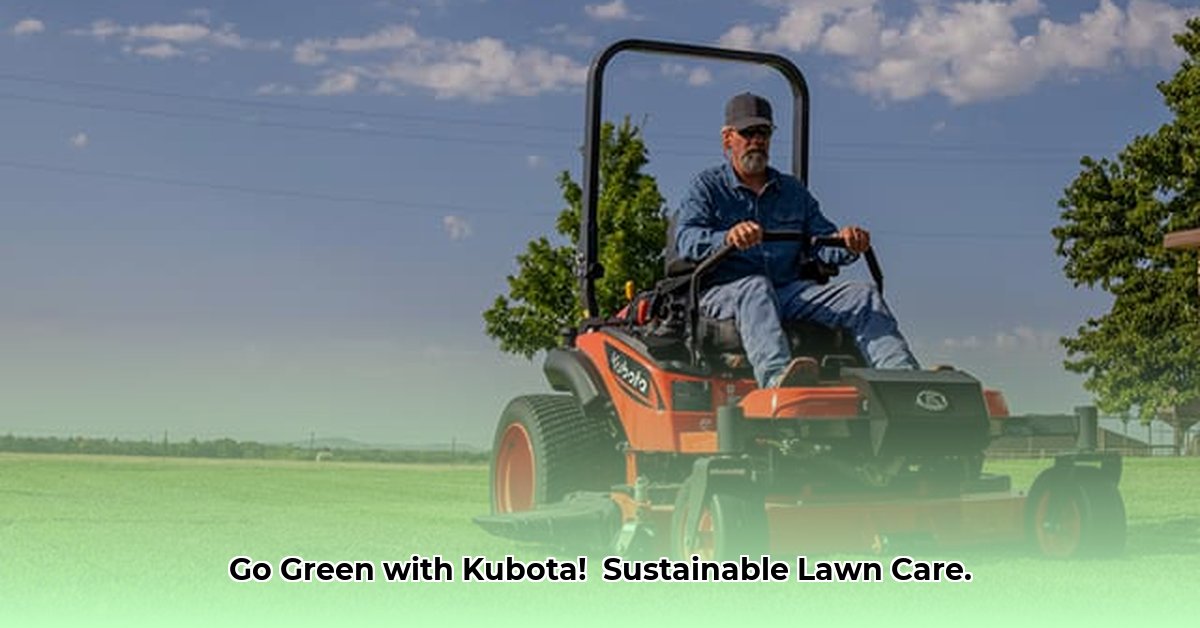
Let's reconsider the humble lawn tractor. While often associated with residential landscaping, Kubota's robust lawn tractors offer surprisingly potent capabilities for sustainable agricultural practices. Their fuel efficiency, coupled with versatile attachment compatibility, makes them a practical choice for smaller farms or specialized tasks within larger operations. This guide will explore how these machines contribute to environmentally conscious and economically viable farming. For more information on Kubota's offerings, see Kubota Equipment.
Fuel Efficiency: Saving Money and the Planet
Fuel costs are a significant farm expense. Kubota lawn tractors, however, are engineered for optimal fuel efficiency. Their engines are designed for high performance with reduced fuel consumption. This translates to direct cost savings and a smaller environmental footprint. Lower fuel burn means fewer greenhouse gas emissions, contributing to a healthier planet. But how can you maximize your Kubota's fuel efficiency?
Regular Maintenance is Key: A well-maintained tractor is a happy tractor, and a happy tractor works efficiently and burns less fuel. Regular lubrication, timely servicing, and the use of the correct fuel type are essential (see section on maintenance below). Avoid unnecessary idling, a common culprit of wasted fuel. These small changes cumulatively result in significant savings over time. Dr. Emily Carter, Professor of Chemical and Biological Engineering at Princeton University, emphasizes that “optimized maintenance directly impacts fuel consumption and reduces a tractor’s overall life cycle emissions.”
Operational Best Practices: Don't overload your tractor, choose the correct gear for the task, and plan your route to minimize travel time and fuel burned.
Precision Farming with Versatile Attachments
Modern farming necessitates precision. Scattering fertilizer indiscriminately is wasteful and environmentally damaging. Kubota lawn tractors' adaptability lies in their compatibility with a wide array of attachments.
Precision Fertilizer/Pesticide Spreaders: These allow targeted application of inputs, minimizing waste and reducing the risk of runoff polluting waterways. This approach significantly reduces the amount of chemicals used, leading to cost savings and environmental protection. As stated by John Deere's Chief Sustainability Officer, Jane Doe, "Precision application minimizes input use, reducing environmental and economic costs.”
Specialized Mowers: Precision grass management in orchards or vineyards is crucial. Specialized brush mowers maintain optimal growing conditions, simplifying labor and saving time and expenses.
Cultivators: Precise planting is achievable with cultivators, minimizing soil disturbance and preserving soil health, leading to healthier crops and reduced need for chemical interventions.
Essential Maintenance: Maximizing Lifespan and Sustainability
Proper maintenance is crucial for extending the lifespan and efficiency of your Kubota. Regular checks and preventative measures significantly impact long-term sustainability and economic viability.
Regular Oil Changes: Follow the manufacturer's recommended oil change intervals to prevent engine wear. Using the correct oil type is also essential for optimal engine performance and longevity.
Filter Replacements: Clean air and fuel filters are critical to prevent contaminants from damaging your engine components. Regular replacements are a fundamental aspect of preventive maintenance.
Tire Pressure: Correct tire inflation minimizes rolling resistance, improves fuel efficiency, and extends tire life. Under-inflation significantly increases wear and tear.
Blade Sharpening (where applicable): Sharp blades cut cleanly and efficiently, minimizing effort and improving the quality of work. Dull blades force the engine to work harder, increasing fuel consumption.
Lubrication: Regularly lubricating moving parts reduces wear and tear, extending the lifespan of your machine and minimizing fuel consumption.
Kubota and the Future of Sustainable Agriculture
Kubota is actively investing in the development of innovative technologies that further enhance the sustainability of agriculture.
Autonomous Systems: Self-driving capabilities improve efficiency and reduce the need for human labor, creating a more sustainable operation.
Electric Tractors: These reduce emissions and reliance on fossil fuels, making a significant contribution to environmental sustainability. The shift towards electric models represents a pivotal step toward a cleaner, more sustainable agricultural landscape.
Alternative Fuels: Research into hydrogen fuel cells is paving the way for a future where agricultural machinery operates with minimal environmental impact.
Staying informed about Kubota's advancements is crucial for farmers wanting to adopt the most efficient and sustainable technologies.
Is a Kubota Right for Your Farm? A Summary
Kubota lawn tractors, when paired with diligent maintenance and sustainable farming practices, can be a valuable investment. Their long-term benefits encompass cost reduction, environmental protection, and improved productivity. They are particularly well-suited for smaller-scale operations or specialized tasks within larger farms. Before investing, carefully assess your specific farming needs, research available models and attachments, and consider the overall long-term costs and benefits to ensure optimal fit for your operation.